
AI’s Environmental Impact: Net Benefit or Net Burden?
More of us are starting to ask about the carbon footprint of AI. That feels like a healthy question.
We’ve been broadly positive on AI because we’ve seen the upside first-hand. We use it in geospatial and measurement workflows, where it can make environmental data faster to analyse and more accessible. Our view is that if we can lower the cost & friction of carbon measurement, more organisations will understand where their emissions sit- and what to do to reduce and remove them.
But as AI adoption grows, the environmental debate is becoming more nuanced.
In part that’s because AI doesn’t just sit in software it runs on real infrastructure. Most AI workloads sit in data centres, and the latest IEA analysis estimates those data centres used about 1.5% of global electricity demand, in 2024 with demand expected to rise sharply from there as AI scales. That doesn’t make AI environmentally negative by default. But it does mean the carbon story depends on how the infrastructure behind AI is built, powered and used. And that’s where the recent evidence gets interesting.
Google’s 2025 production-scale study found the median Gemini text prompt used 0.24 Wh of energy and about 0.26 mL of water, roughly five drops. Google also reported a 33x reduction in energy use and 44x reduction in carbon footprint for that median prompt over one year through efficiency gains and cleaner energy procurement.
But that’s not the whole story. The water footprint of AI depends heavily on which model is being used, which data centre is serving it, how it’s cooled. E.g a data centre using evaporative cooling in a hot, dry region can look very different from one using other cooling approaches in a cooler location. Researchers are increasingly pointing to climate zone and the water intensity of electricity generation as major drivers of AI-related water use.
At the same time, newer research is cautioning against a simple conclusion: efficiency gains don’t automatically mean lower overall impact. As AI becomes cheaper and easier to use, total demand can rise quickly along with compute. That rebound effect is now a serious part of the scientific debate.
For organisations in New Zealand and Australia, there are really two questions.
What value is AI actually creating? And where is the carbon footprint really landing?
For most organisations, that footprint won’t sit in one neat place. It’s more likely to show up across purchased electricity, cloud services and the digital infrastructure behind them.
The value can be real - but so is the need to assess the net impact properly.
Because the question is no longer whether AI can help. It’s whether we’re deploying it in ways that create genuine net benefit.
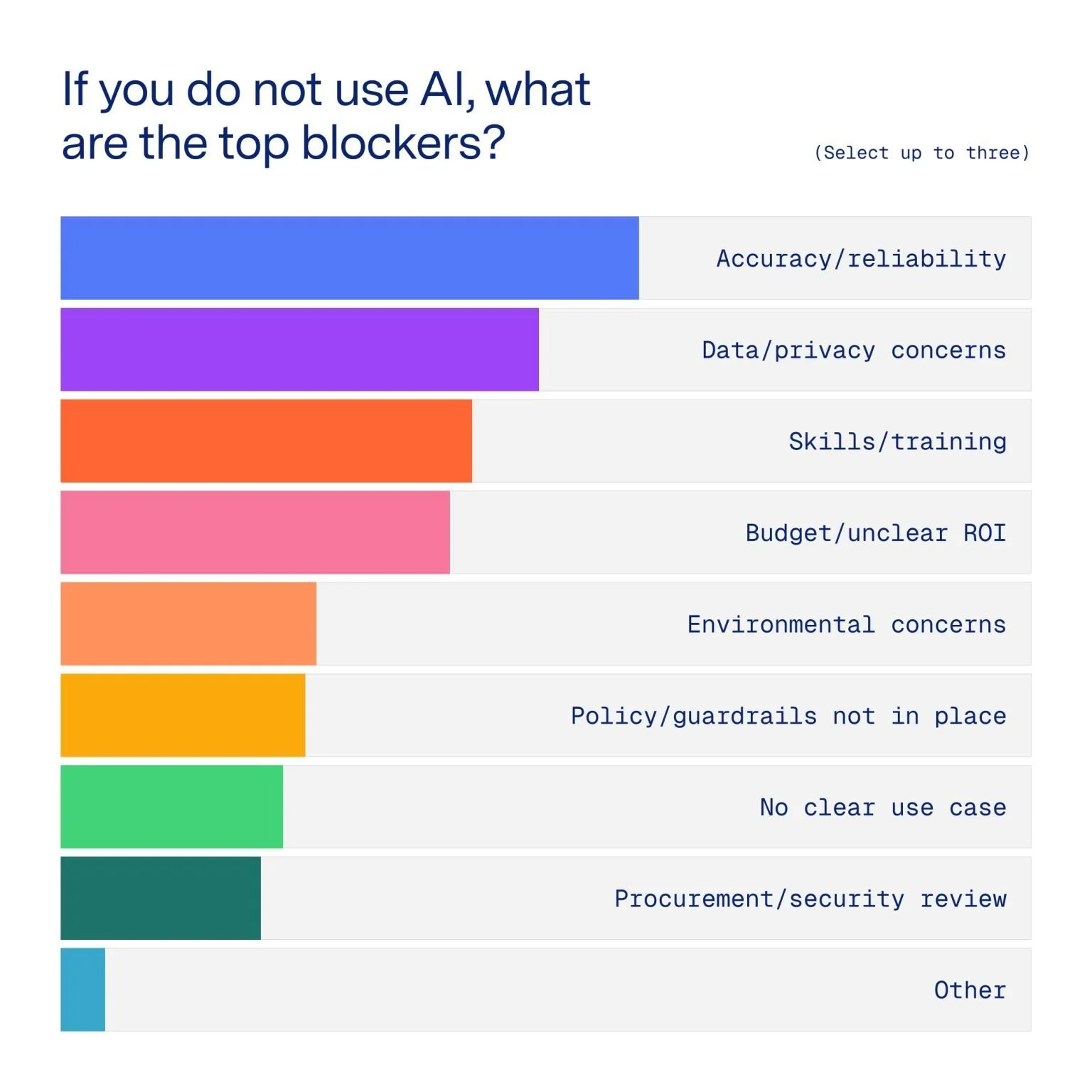
Image sourced from: https://watershed.com/state-of-corporate-sustainability-ai-2026